
Is Your Water Safe? Why A Whole Home Water Filtration System Is Worth A Look

Summer puts your home’s water system to work. Between extra showers, laundry, outdoor chores, cooking, gardening, and guests, your plumbing handles a lot more daily use. That is when water quality issues often become harder to ignore.
Maybe your tap water smells like chlorine. Maybe your well water looks cloudy after heavy rain. Maybe you are tired of stains in sinks, buildup around fixtures, or water that just does not taste right. These problems are common for homeowners across Central Virginia, especially in homes with well water, older plumbing, or mineral-heavy water.
At Just Better Home Services, we know clean, dependable water affects more than what comes out of your kitchen faucet. It can affect your showers, laundry, water heater, plumbing fixtures, appliances, and daily comfort. A whole-home water filtration system helps treat the water entering your house, so every faucet, shower, and appliance gets better-quality water from the start.
In this guide, we’ll break down how whole-home water filtration works, what it can help remove, how it compares to a water softener, and how to know whether your home may benefit from professional water filtration installation.
In This Article:
What Is a Whole Home Water Filtration System?
A whole-home water filtration system, also known as a whole-house water filter, is installed where water enters your home. Instead of filtering only one sink or refrigerator dispenser, it helps treat the water before it travels through your plumbing system. That means the water used for showers, laundry, cooking, dishwashing, and appliances all passes through the filtration system first.
This is different from a point-of-use filter, such as a pitcher, refrigerator filter, or under-sink drinking water filter. Those options only treat water at one specific location. A whole-home system is designed to improve water quality throughout the entire house.
For many homeowners, that makes whole-home filtration more convenient. You do not have to think about which faucet is filtered. You get treated water throughout the home, not just at the kitchen sink.
Why Water Quality Issues Show Up More in Summer
Water quality problems can happen at any time of year. Still, many homeowners notice them more during summer because water use increases.

You may be:
Running more laundry
Taking more showers
Watering gardens or rinsing outdoor equipment
Filling pools or water toys
Hosting guests
Using more ice and drinking water
Noticing odors more in warm, humid weather
Municipal water systems also use disinfectants to help keep drinking water safe as it travels through the distribution system. Chlorine and other disinfectants play an important public health role, but they can also create noticeable taste and odor issues in some homes. EPA drinking water rules regulate disinfectants and disinfection byproducts in public water systems.
For homes on private wells, heavy rain can also change what you notice at the tap. Sediment, cloudiness, musty smells, and changes in taste can point to issues that need testing. The CDC recommends testing private well water at least once per year for total coliform bacteria, nitrates, total dissolved solids, and pH. If your water tastes, smells, or looks different, do not guess. Test first, then choose the right solution.
Common Water Quality Issues in Virginia Homes
Water quality varies from home to home. A house on municipal water in downtown Charlottesville may have different concerns than a rural property on well water. Here are some of the most common problems homeowners ask about.
Chlorine Taste and Odor
If your water smells like a swimming pool or has a sharp chemical taste, chlorine may be the reason. Municipal water providers often use disinfectants to help protect public drinking water. That treatment is important, but some homeowners still prefer to reduce the taste and odor once the water reaches their home.
Sediment and Cloudiness
Sediment can make water look cloudy, gritty, or dirty. In well water, sediment may show up after heavy rain, changes in groundwater conditions, or issues with the well system. In any home, rust or debris can also come from aging pipes or water heater issues.
A sediment filter for well water can help catch particles before they move through fixtures and appliances. However, sediment is also a clue. If it keeps coming back, your home may need a deeper look at the well, pressure tank, plumbing, or water heater.
Hard Water Residue
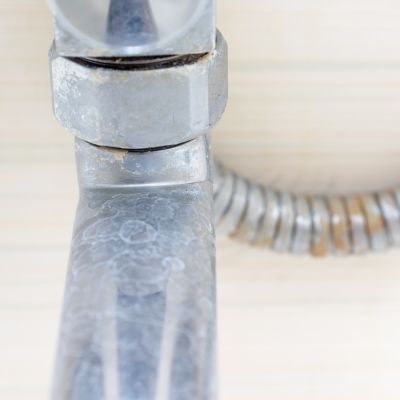
Hard water can leave spots on dishes, buildup on fixtures, dry-feeling skin, and residue in showers. It can also contribute to scale inside appliances and water heaters.
Iron Staining and Mineral Buildup
Orange, brown, or reddish stains around sinks, toilets, tubs, or laundry may point to iron in the water. Mineral buildup can also collect on faucets, shower heads, dishwashers, washing machines, and water heaters.
This is not just a cleaning headache. Over time, buildup can make fixtures harder to maintain and may reduce the efficiency of certain appliances.
Sulfur Smells in Well Water
A rotten egg smell is often associated with sulfur-related issues. This is especially common in some well water systems. The right solution depends on what testing finds. In some homes, odor treatment may require filtration. In others, the well system or water heater may need attention.
Because different problems can cause similar smells, testing matters before choosing equipment.
While acting in a similar manner, a whole-home water filtration system and a water softener are not the same thing, though they are often confused. We’ll explain the difference below.
What Does a Whole House Water Filter Remove?
The answer depends on the type of system installed. There is no single “best water filtration system” that fits every house. A home on municipal water may need a different setup than a home on well water. A home with a chlorine taste may need a different solution than a home with sediment, iron, sulfur odor, or acidic water.
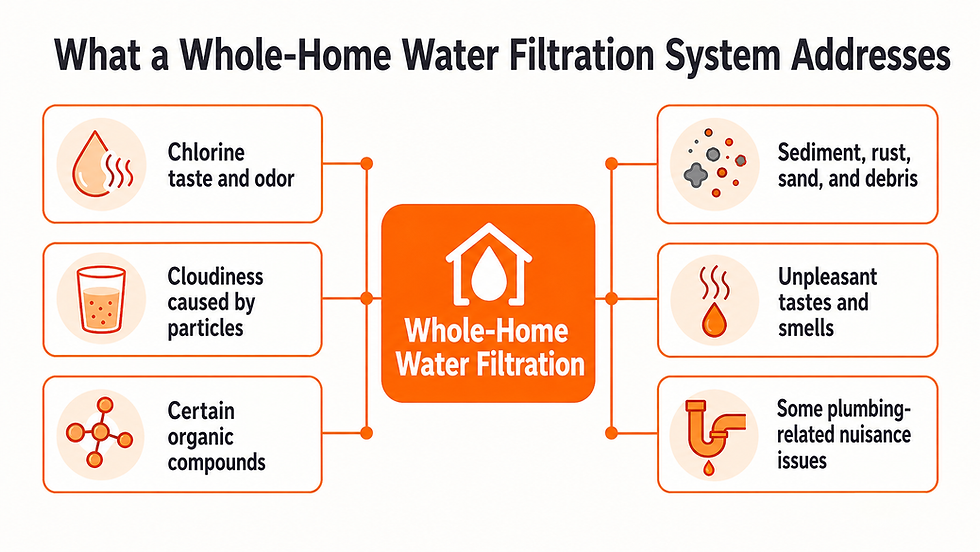
Depending on the system, a whole-house water filter may help reduce:
Chlorine taste and odor
Sediment, rust, sand, and debris
Cloudiness caused by particles
Unpleasant tastes and smells
Certain organic compounds
Some plumbing-related nuisance issues
Choosing the right water filter can be tricky because different systems handle different problems.
For instance, a standard carbon filter is great for improving taste, removing smells, and catching certain chemicals. However, it might not catch everything. Other contaminants require more specialized equipment.
Because you can't always see or smell what’s in your water, having it professionally tested is the best first step. This ensures you pick a system that actually fixes your specific water issues rather than guessing.
Whole Home Filtration vs Water Softeners
Many homeowners ask about water filtration vs water softener systems. They are related, but they do different jobs.
What Water Filtration Does
A water filtration system is designed to reduce specific unwanted materials in the water. Depending on the system, that may include sediment, chlorine taste, odor, rust particles, or other tested concerns. Filtration is often the right conversation when your main complaints are taste, smell, cloudiness, discoloration, or visible particles.
What a Water Softener Does
A water softener is designed to address hardness minerals, mainly calcium and magnesium. These minerals are responsible for scale, spots on dishes, residue around fixtures, and soap that does not lather well. Softening is typically what you want to address when your main complaints are hard water stains, scale buildup, and appliance wear related to mineral deposits.
When You May Need Both
Some homes need filtration. Some need softening. Some need both. For example, a homeowner with municipal water may want filtration to improve chlorine taste and smell. A homeowner with hard well water may need a sediment filter, iron treatment, and a water softener. Another homeowner may need a reverse osmosis system for drinking water, plus a whole-home setup for the rest of the house.
The best setup starts with testing, not guessing.
Benefits of Whole Home Water Filtration
A professionally installed home water filter system can improve daily comfort in several ways.
Better Tasting Drinking and Cooking Water
If your water has a strong chlorine taste, metallic flavor, or unpleasant odor, you may avoid drinking it. Filtration can make tap water more enjoyable for drinking, coffee, tea, cooking, and ice.
Cleaner Showers and Laundry
Filtered water can improve the water you use for bathing and washing clothes. Depending on the issue being treated, homeowners may notice less odor, fewer particles, or cleaner-feeling water throughout the home.
Reduced Buildup in Plumbing and Appliances
Sediment, rust, and mineral-related issues can collect inside plumbing fixtures and appliances. The right filtration setup can help reduce what enters your home’s plumbing system. This can be especially helpful for water heaters, washing machines, dishwashers, ice makers, and fixtures that see daily use.
Better Protection for Fixtures and Equipment
Water quality affects more than taste. Sediment and buildup can make plumbing fixtures harder to maintain. In some cases, untreated water can contribute to staining, corrosion, clogs, or premature wear.
If your home already has signs of acidic water, staining, or mineral buildup, filtration may be only one part of the solution. Water testing can help determine whether your home needs filtration, softening, pH correction, or another treatment option.
Less Reliance on Bottled Water
If you buy bottled water because you do not like your tap water, whole-home filtration may help reduce that habit. For many families, filtered water at home is more convenient than hauling cases of bottled water into the house.
Added Confidence in Your Home’s Water
For many homeowners, filtered water is also about peace of mind. Microplastics are becoming a growing concern for many families. Not every filter is designed to reduce microplastics, and no system should be chosen based on guesswork. However, some filtration systems may help reduce certain particles, including larger microplastics, when the system is properly selected for that purpose. This is another reason water testing and professional guidance matter.
Is Whole Home Water Filtration Worth It?
A whole-home water filtration system may be worth it if water quality problems affect your daily comfort, plumbing, appliances, or confidence in your home’s water.

You may benefit from water filtration installation if:
Your water has a strong chlorine smell or taste
Your water looks cloudy or has visible sediment
You are on well water
You notice orange, brown, blue-green, or black staining
Your water smells musty, metallic, or like rotten eggs
Your fixtures collect buildup quickly
Your water heater or appliances need frequent attention
Your laundry smells off or feels dingy
You rely heavily on bottled water
You want filtered water throughout the home, not just at one sink
For homes on private wells, testing is especially important. The Virginia Department of Health has addressed that some water contaminants are nuisance concerns, such as taste, smell, or staining, while others may have health implications. Testing helps homeowners know what is in the water before choosing a response.
Why Water Testing Comes First
At Just Better Home Services, we do not recommend choosing a system based on guesswork. Water can look clear and still have issues. It can also smell unpleasant for reasons that require different solutions. Professional water testing helps identify what is actually happening.

Testing may check for concerns such as:
pH
Hardness
Iron
Sediment
Total dissolved solids
Chlorine
Odor sources
Well water concerns
Other water quality indicators based on the home
Once the results are clear, a technician can recommend the right solution. That may be a whole-home filtration system, a water softener, a reverse osmosis drinking water system, a sediment filter, a UV system, or a combination of options.
This is especially important for homes on private wells. If your well water changes suddenly, smells different, looks cloudy, or contains more sediment than usual, schedule testing before assuming a filter alone will solve the problem.
Installation and Maintenance: What to Expect
A whole-home water filtration system is usually installed near the main water line where water enters the home. In many homes, that may be in a basement, utility room, crawl space, garage, or mechanical area.

A professional installation may include:
Reviewing water test results
Selecting the proper filtration equipment
Locating the main water line
Installing the filtration system
Checking water pressure and flow
Testing for leaks
Explaining filter replacement or maintenance needs
Reviewing the system with the homeowner
Installation timelines vary based on the home, plumbing layout, system type, and any additional work needed. Some systems are straightforward. Others require more planning, especially if the home has well equipment, pressure tanks, tight access, older piping, or multiple treatment stages.
Maintenance also depends on the system. Some filters need routine replacement. Some systems require media changes. Others may need periodic service to keep them working correctly.
Professional installation matters because the system has to be sized correctly, connected properly, and matched to the home’s water conditions. A poor setup can restrict water pressure, fail to treat the right issue, or create maintenance headaches later.
How Just Better Home Services Can Help
Better water starts before it reaches the faucet. A properly selected whole-home water filtration system can help improve water taste and smell, reduce sediment, protect fixtures, and make everyday water use more comfortable. For Central Virginia homeowners, it can be especially helpful during the summer months when water use increases, and existing water quality issues become more noticeable.
At Just Better Home Services, our team helps homeowners identify water quality issues and choose practical solutions based on testing, not guesswork. Whether your home is on municipal water or private well water, we can help you understand what is in your water and what options make sense for your home.
At Just Better Home Services, our plumbing team can help with:

Professional water quality testing
Whole-home water filtration system installations
Well water filtration options for stains, odors, and mineral concerns
Water softener installation
Reverse osmosis systems for drinking water
Filter replacement, maintenance, and system inspections
If you are noticing chlorine smells, sediment, staining, hard water residue, or unpleasant tastes, now is a good time to schedule water testing or ask about whole-home water filtration installations.
Cleaner water, better comfort, and stronger plumbing protection can all start at the source. Call us to set up an appointment today and get Just Better water!
Whole House Water Filtration FAQs
What does a whole-house water filter remove?
A whole-house water filter may reduce sediment, rust, chlorine taste and odor, unpleasant smells, cloudiness, and certain organic compounds. The exact results depend on the system installed and the water issues found during testing.
Is whole-home water filtration worth it?
Whole home water filtration may be worth it if you dislike your water’s taste or smell, notice sediment or staining, rely on bottled water, or want better-quality water throughout your home. Testing is the best first step.
What is the difference between water filtration and a water softener?
Water filtration reduces specific contaminants, particles, tastes, and odors. A water softener reduces hardness minerals that cause scale, spots, and buildup. Some homes need one system, while others benefit from both.
Do I need a whole-house water filter if I have city water?
Maybe. Municipal water is treated before it reaches your home, but some homeowners still notice chlorine taste, odor, cloudiness, or sediment. A whole-home system can help improve water quality inside the house.
Do I need a whole-house water filter if I have well water?
Many well water homes benefit from filtration, but the right system depends on test results. Well water may have sediment, iron, sulfur odors, hardness, pH issues, or other concerns that require specific treatment.
How often should well water be tested?
The CDC recommends testing private well water at least once per year for total coliform bacteria, nitrates, total dissolved solids, and pH. Additional testing may be needed based on location, water changes, or local concerns.

Comments